Standard
IAPMO R&T and WQA: bodies, not standards
Two certifiers. Naming one of them still leaves the standard number unsaid.
No standard number is named on the listing. Not named: 42, 53, 401.No cell on the three-cell chip belongs to a certifying body, which is exactly why this page exists. The chip records standard numbers. A body is a different kind of fact.
What it covers
Certification programs run by organizations that test and list products against published standards, including the NSF/ANSI drinking water treatment unit standards.
A body is not a standard
NSF is confusing because it is both. NSF develops the NSF/ANSI standards and it also operates a certification program that certifies products to them. WQA and IAPMO R&T are certification bodies that certify products against those same published standards. Others exist.
So "WQA certified" is a sentence about who issued a certificate. "NSF/ANSI 53" is a sentence about what the certificate is for. A listing can carry the first without the second, and four listings in this catalog do exactly that.
The listings that name a body
One pitcher listing names IAPMO and then names the substances the certification covers, which is the most specific certification wording on this site even though it contains no NSF/ANSI number. Three listings name WQA alongside an unnumbered NSF/ANSI mention.
None of those four fills a cell on the chip. That is not a criticism of the products. It is a description of what their listings said, which is all this site claims to report.
How to turn a body into an answer
Find the model number, not the product name. Then search the certifier listing directly. WQA publishes a product search, IAPMO R&T publishes a certified product listing, and NSF publishes its own database of certified drinking water treatment units.
The entry will tell you the standard and the claims. It takes a couple of minutes and it replaces every adjective on the listing page with a fact.
What it does not cover
- Which standard number a given certification was issued against
- Which specific reduction claims a listed product holds
- Anything at all, when a listing names the body and stops there
- The durability, fit or lifespan of the product
How to read a claim
A listing naming IAPMO or WQA has named who did the work, not what the work was. The follow-up question is always the same: certified to which standard, for which claims? Both organizations publish searchable listings that answer it.
Listings that name it
Four listings name IAPMO or WQA. One names IAPMO with a substance list; three name WQA next to an NSF/ANSI mention that carries no number.
The first of them is ZeroWater Pitcher, 10 cup. The listing names IAPMO and names substances, but no NSF/ANSI standard number. Read the IAPMO listing for the exact claims rather than assuming 42, 53 or 401. It sits in Filter Pitchers and Replacement Filters.
4 listings shown, which is all of them
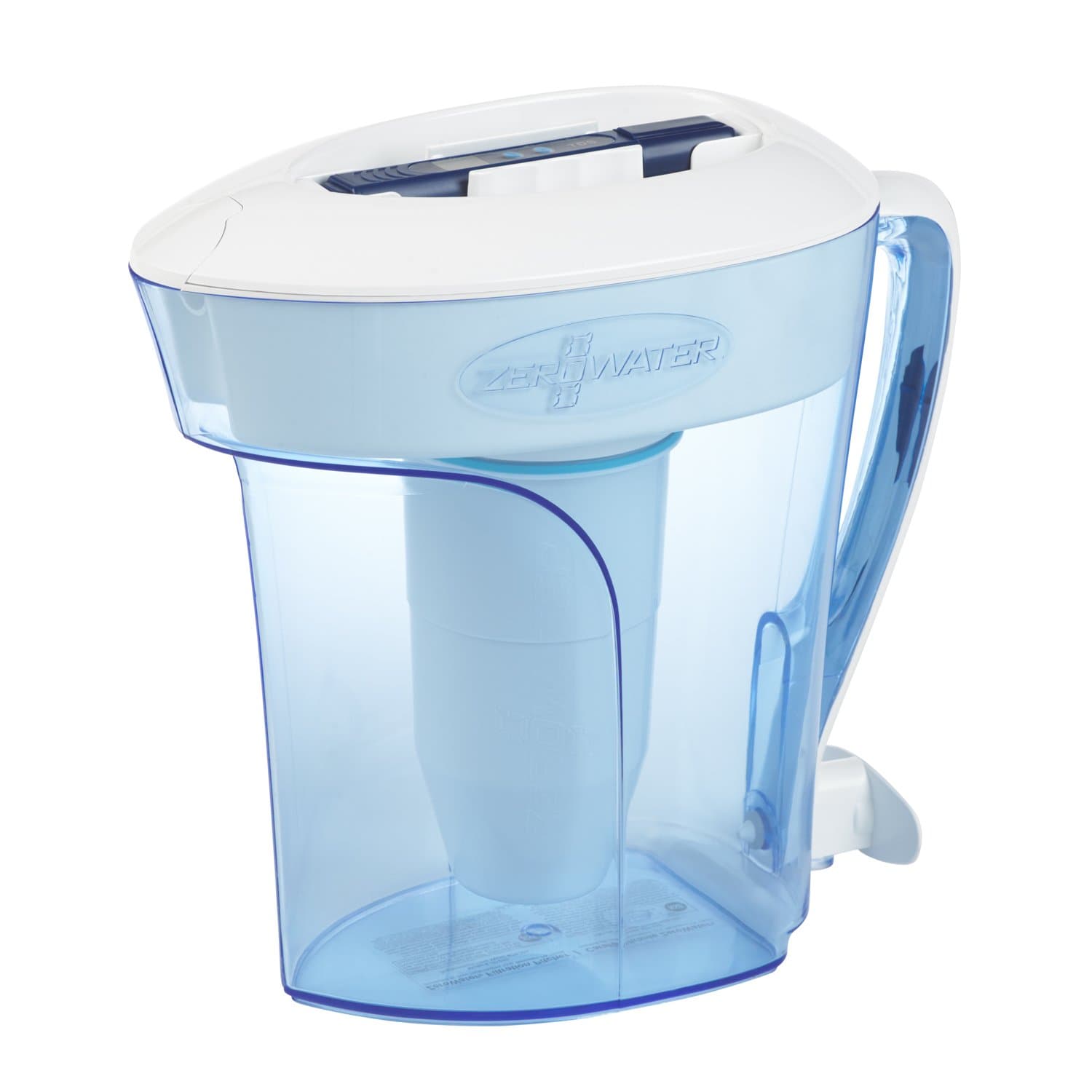 Only listing here naming IAPMO
IAPMO appears on one pitcher listing in this category. The others name NSF, WQA, or no body at all.
ZeroWater Pitcher, 10 cup
10 cup statedThe listing states IAPMO certification for lead, PFOA/PFOS, chromium and mercury, and a 5-stage filter.
No standard number is named on the listing. Not named: 42, 53, 401.The listing names IAPMO and names substances, but no NSF/ANSI standard number. Read the IAPMO listing for the exact claims rather than assuming 42, 53 or 401.
View the listing on AmazonA 10 cup pitcher whose listing names IAPMO certification and names the substances the claim covers, which is more specific than most listings in this category manage. It also states a 5-stage filter. Naming a body and naming substances is still not the same as naming an NSF/ANSI standard number.
Suits Someone who wants a listing that names both a certifying body and the substances.
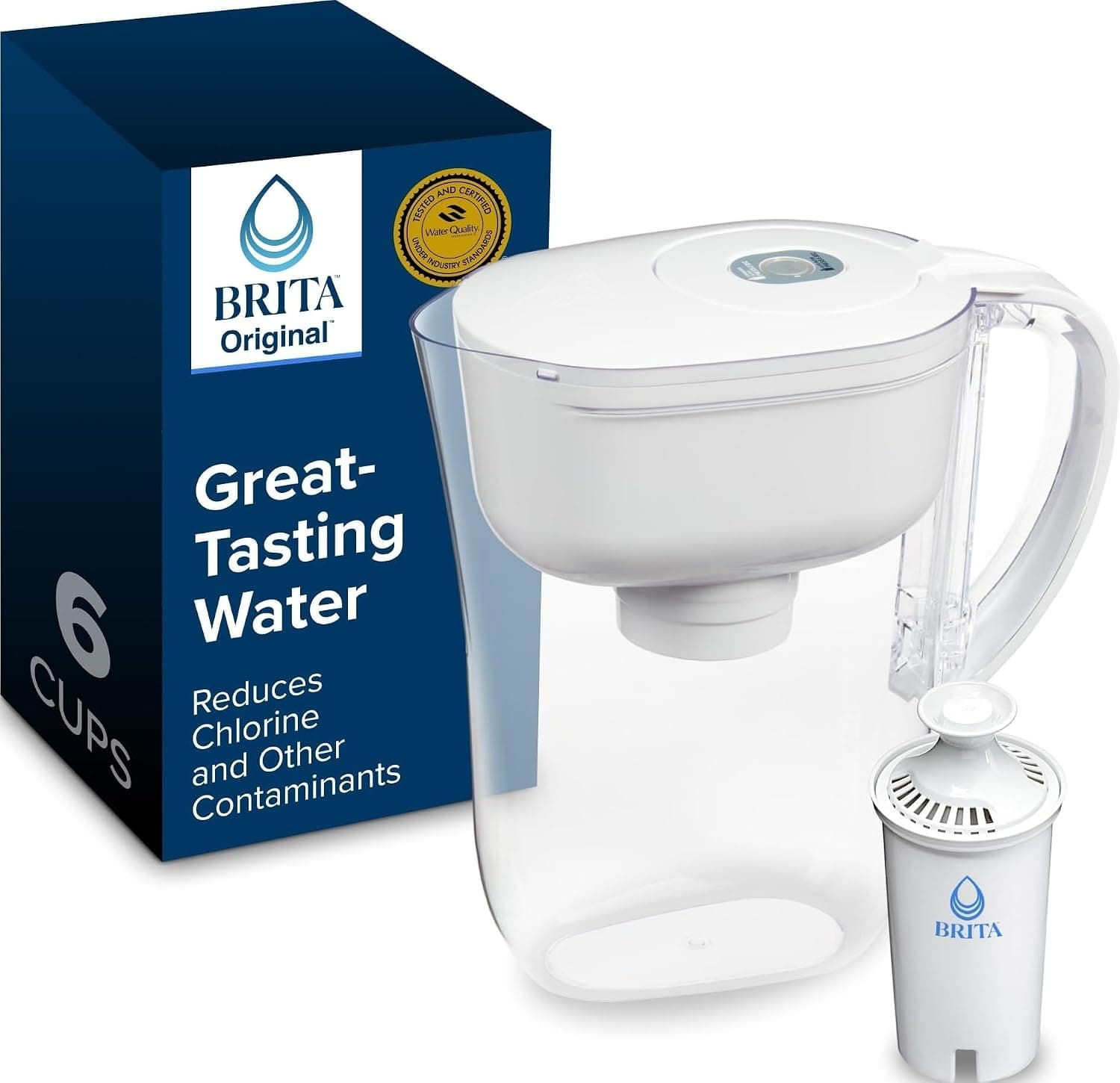 Smallest stated capacity in this category
6 cup, and 6 cup appears exactly once across the eight pitcher listings here.
Brita Small Pitcher, 6 cup
6 cup statedThe listing states WQA and NSF/ANSI certification and reduction of chlorine, copper, mercury and cadmium, filter lasts 2 months.
No standard number is named on the listing. Not named: 42, 53, 401.The listing names NSF/ANSI without naming a standard number, so no cell is filled here.
View the listing on AmazonA 6 cup pitcher, the smallest here, with a stated two month filter life and a listing that names both WQA and NSF/ANSI without a standard number. Small pitchers fit a door shelf that a 10 cup one does not.
Suits A fridge door shelf where a full-size pitcher will not stand up.
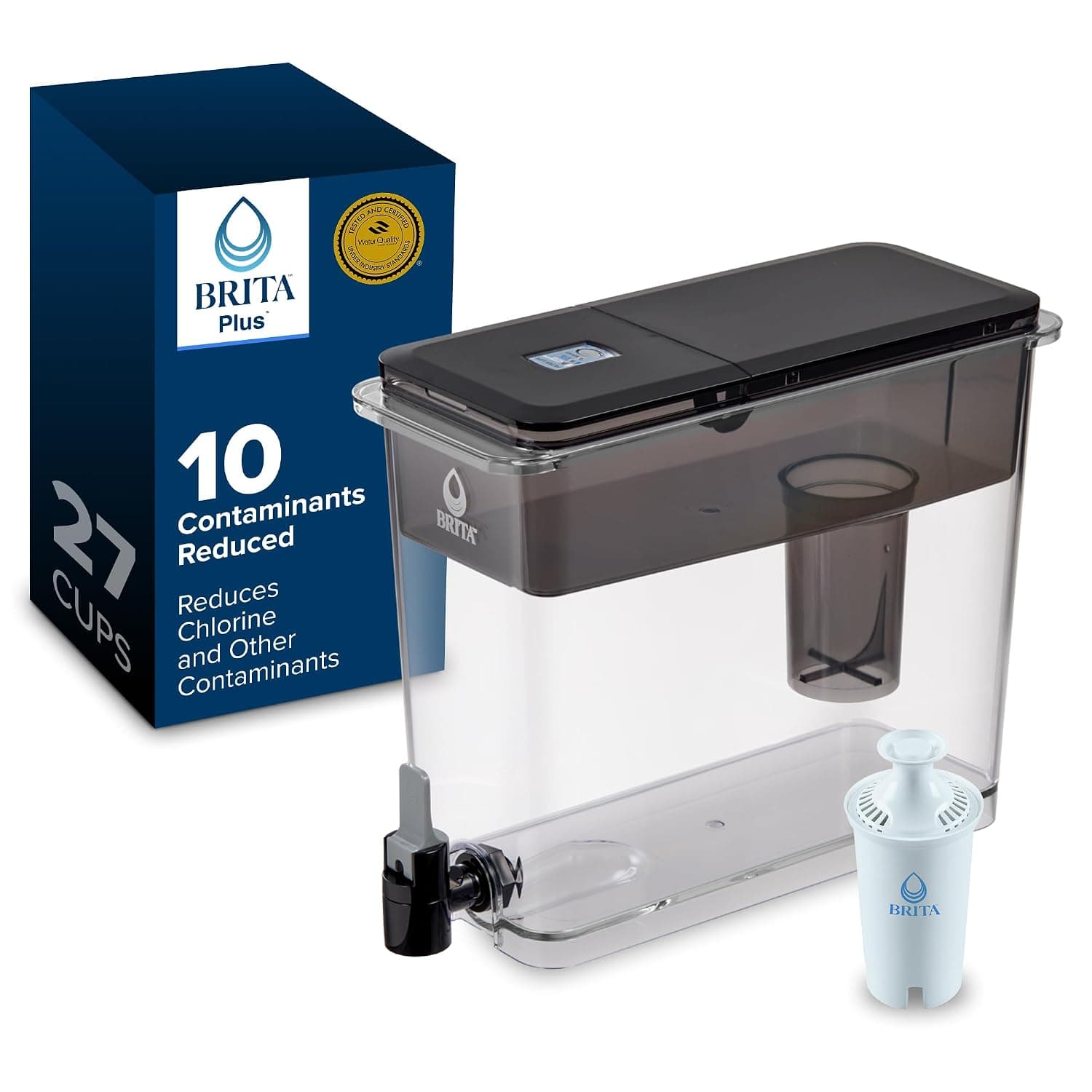
Brita XL Pitcher, 27 cup
27 cup statedThe listing states WQA and NSF/ANSI certification and reduction of chlorine, copper, mercury and cadmium, filter lasts 2 months.
No standard number is named on the listing. Not named: 42, 53, 401.The listing names NSF/ANSI without naming a standard number, so no cell is filled here.
View the listing on AmazonThe 27 cup version of the same filter family, with the same two month stated life and the same unnumbered certification wording. Note that the stated life does not change with the larger reservoir, which is exactly the situation the filter life tool exists for.
Suits A household that empties a 10 cup pitcher faster than it fills.
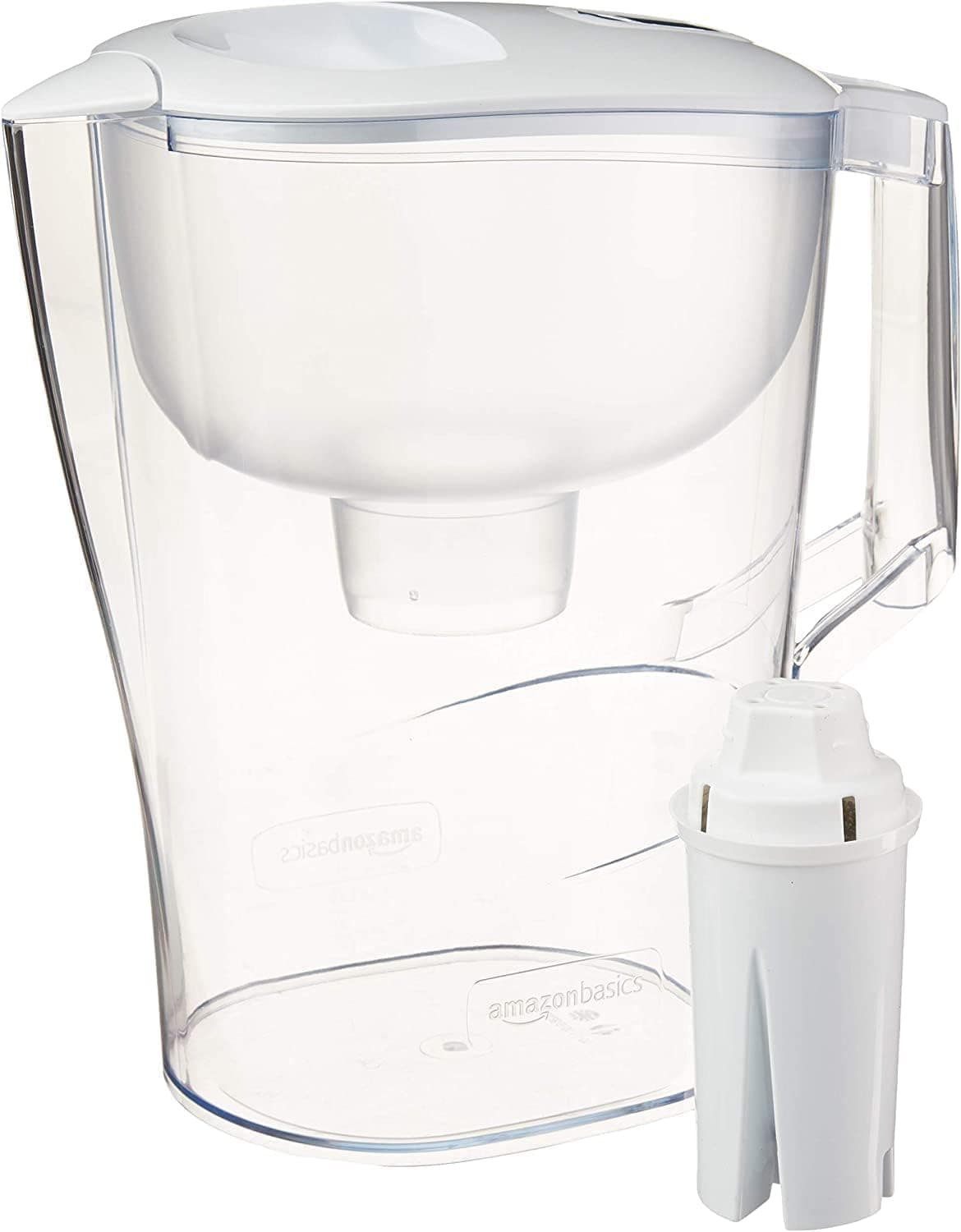 Only listing here stating another brand's filters fit
Cross-brand cartridge compatibility is stated on one pitcher listing in this category and on none of the others.
Amazon Basics Pitcher, 10 cup
10 cup statedThe listing states WQA and NSF certification and compatibility with Brita filters, made in Europe.
No standard number is named on the listing. Not named: 42, 53, 401.The listing names NSF/ANSI without naming a standard number, so no cell is filled here.
View the listing on AmazonA 10 cup pitcher whose listing states compatibility with Brita filters, which is a claim about cartridges rather than about water. Both WQA and NSF are named without a standard number, and the compatibility statement belongs to the seller of the pitcher, not to the filter brand.
Suits Someone who wants the cartridge aisle open rather than tied to one brand.