Vessels
Capacity and cup holders
One number is real. The other is an adjective wearing a number's clothes.
What is measurable here
- Stated volume in ounces, which every vessel listing here gives except one that gives three
- How many vessels here state more than one size, which is exactly one
- The spread from smallest to largest across the catalog
What is the seller's wording
- Cup-holder friendly, cupholder compatible, cup-holder fit: three phrasings, zero diameters
- Half gallon, which is a restatement of 64 oz rather than a second fact
- Traveler, commuter and everyday as size descriptions
Ounces are the honest number
Almost everything printed on a vessel listing is an adjective. Stated volume is the exception: it is a number, it is checkable with a measuring jug when the thing arrives, and sellers are consistent about it because getting it wrong is a returns problem rather than a marketing one.
So the sensible way to read this catalog is by ounces first. The plot below places every vessel listing that states a volume on one axis, from the smallest to the largest. It is drawn from the same data the category pages use, so the count under it is the count of listings and not a number typed into a sentence.
30 vessel listings state a volume: 29 with a single figure, and 1 stating more than one size, drawn as a span with a dashed edge. Each capsule links to the category it sits in, and every number here is read from the same data the category pages use.
Cup-holder fit is not a number here
A car cup holder has a diameter and a depth. A tumbler has a base diameter and a height. Fit is a comparison between four numbers, and it would be settled instantly if listings published two of them.
None of them do. What appears instead is a phrase, in at least three different wordings across this catalog, and the phrase carries no dimension at all. That makes it unfalsifiable, which is a polite way of saying it cannot be wrong and therefore cannot be right either.
- Mentions a cup holder7
Phrase only. No diameter appears on any of them.
- Says nothing about holders23
Which is the same amount of dimensional information.
What to do instead
Measure the holder before you order. A tape measure across the opening and a ruler down the side takes a minute and produces two numbers no listing gave you. Then, when the vessel arrives, measure its base and its height before the packaging goes out.
A handle is the other thing that stops a tumbler seating, and handles are visible in the photographs even when nothing states their clearance. Four of the five large tumblers in this catalog have one.
Size is a logistics decision, not a health one
A larger vessel means fewer refills and more weight. That is the entire trade, and it is a practical one about bags and desks and car footwells.
This site does not tell anyone how much to drink. Intake depends on the person, the climate and their health, and drinking too much water carries its own risks. Pick the size that fits the bag and the day; questions about intake belong with a clinician.
Care and the rules that are not negotiable
- Measure your cup holder before ordering, because no listing here will do it for you.
- Check the manufacturer instructions before putting anything hot or carbonated into a sealed vessel.
- Treat "half gallon" and "64 oz" as the same fact stated twice.
Listings this page refers to
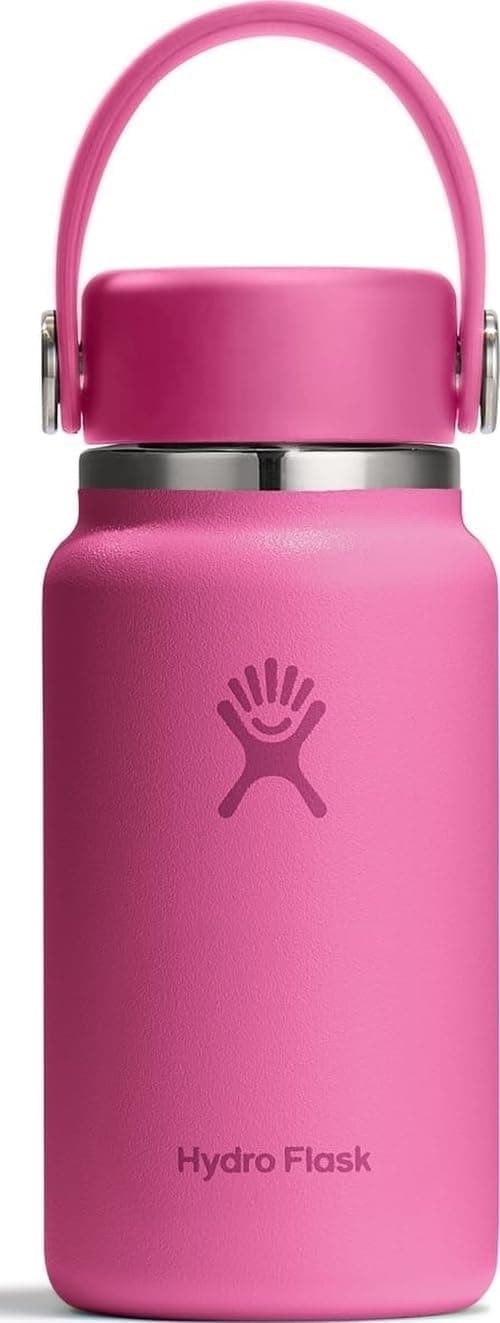 Smallest stated capacity in this category
6.7 oz, and 6.7 oz appears exactly once across the seven flask listings here.
Hydro Flask Micro Bottle, 6.7 oz
6.7 oz statedThe listing states a leak-proof pocket or purse flask, insulated.
View the listing on AmazonAt 6.7 oz this is the smallest vessel in the catalog and the one that defines the left edge of the capacity plot on the front page. The listing calls it a pocket or purse flask and states a leak-proof design.
Suits A pocket where any full-size bottle is out of the question.
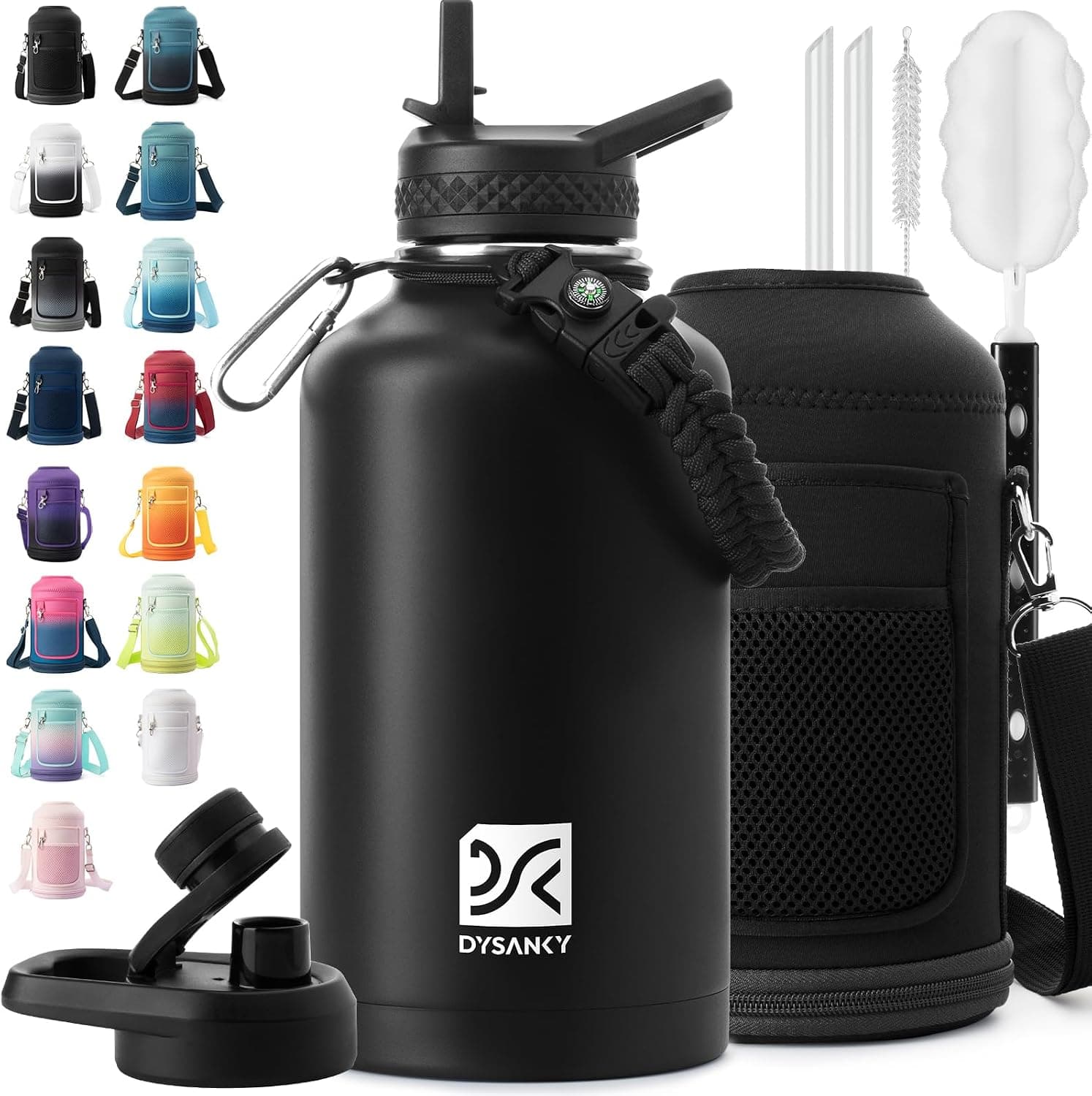 Largest stated capacity in this category
64 oz, and 64 oz appears exactly once across the thirteen bottle listings here.
DYSANKY Insulated Water Jug, 64 oz
64 oz statedThe listing states a straw lid, a spout lid, a carrier bag, BPA-free, half gallon.
View the listing on AmazonA half-gallon jug that ships with two lids, a straw one and a spout one, plus a carrier bag. At 64 oz this is a thing you carry by the bag rather than something that goes in a cup holder, and the listing does not claim otherwise.
Suits A day where refilling is inconvenient and carrying weight is not.
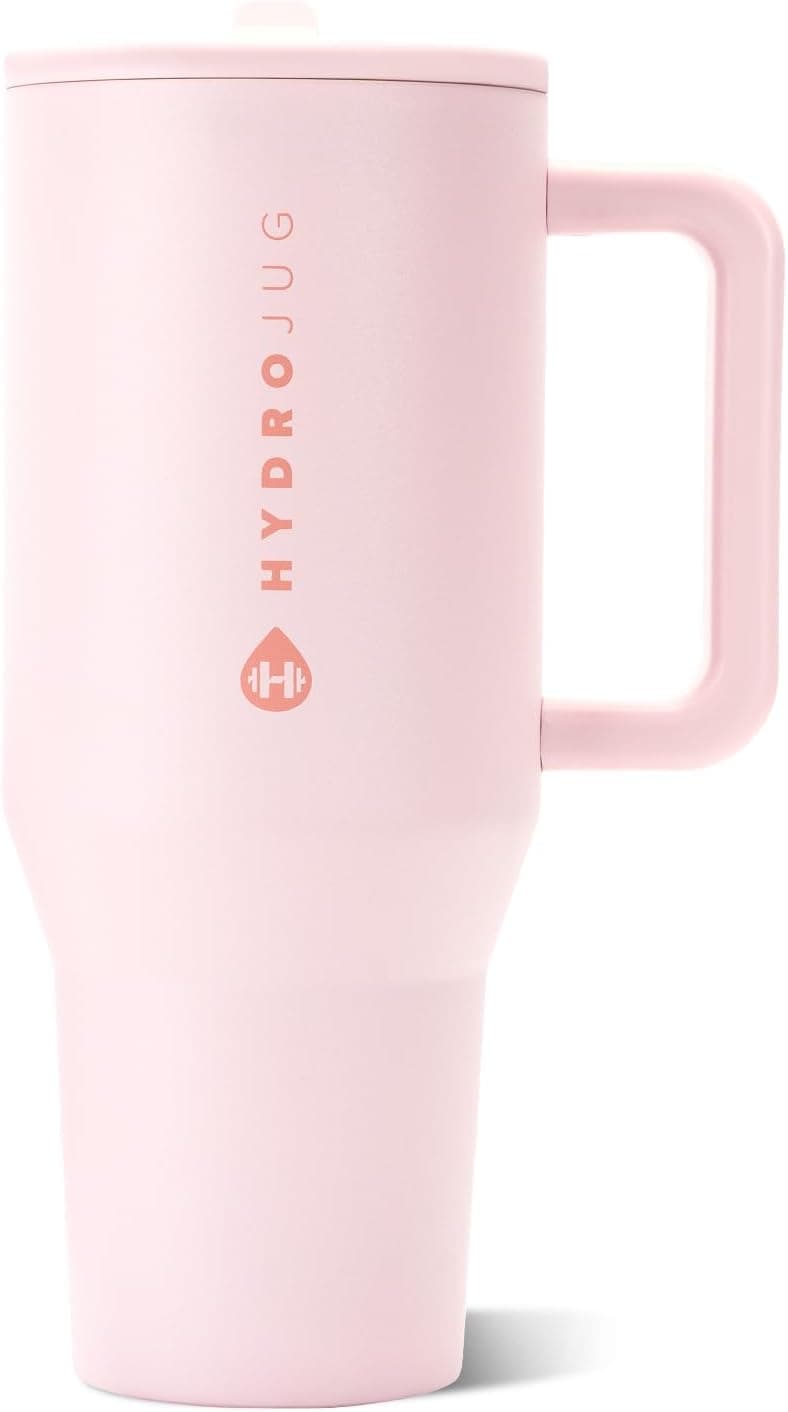 Only listing here stating triple wall insulation
Triple wall appears on one tumbler listing in this category. Every other insulated listing here says double wall or does not say.
HydroJug Traveler Tumbler, 40 oz
40 oz statedThe listing states triple wall insulation, flip straw lid, leak-resistant, cup-holder friendly, dishwasher safe.
View the listing on AmazonA 40 oz tumbler whose listing states triple wall insulation, a flip straw lid, a cup-holder friendly base and dishwasher safe construction. It also says leak-resistant rather than leakproof, which is the more careful of the two words and worth reading as deliberate.
Suits A commute where the tumbler lives in the holder and gets washed in the machine.
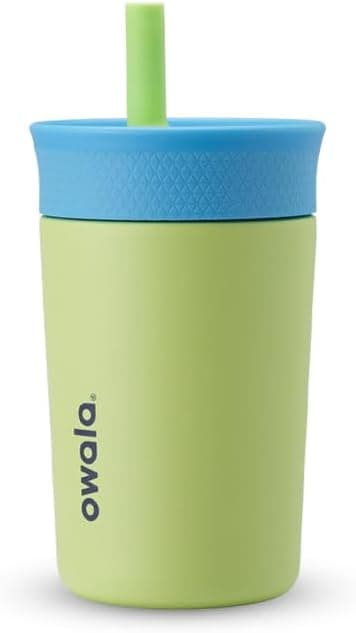 Smallest stated capacity in this category
12 oz, and 12 oz appears exactly once across the ten tumbler listings here.
Owala Kids Tumbler, 12 oz
12 oz statedThe listing states a spill-resistant lid, reusable straw, double-wall vacuum insulation, cup-holder friendly.
View the listing on AmazonA 12 oz tumbler with a reusable straw and a lid the listing calls spill-resistant, which is the careful wording rather than the confident one. Double-wall vacuum insulation is stated, and adults decide what goes in it.
Suits A small straw cup that fits a car holder and gets washed daily.