Standard
NSF/ANSI 53: the health effects list
The health effects standard. Specific contaminants, certified one claim at a time.
Named on the listing: NSF/ANSI 53. Not named: 42, 401.The middle cell. Filled only where a listing names 53 as a number, never inferred from a listing that names 42 or names NSF without a number.
What it covers
Reduction claims for contaminants that the standard classes as having health effects. Lead is the best known of them, and a product is certified for the specific claims it was tested for, not for the whole list.
What NSF/ANSI 53 actually is
NSF/ANSI 53 is the health effects standard for drinking water treatment units. Where 42 deals with what you can taste and see, 53 deals with contaminant reduction claims the standard classes as health related. Lead is the claim most people are looking for when they arrive at this page; cysts, certain volatile organic compounds and several metals also sit under it.
This site describes what the standard covers and stops there. It does not tell you what any of those substances do to a person, because that is a medical and toxicological question and a water bottle catalog is the wrong place to answer it. The EPA and your local health department are the right places, and they are linked at the bottom of this page.
Certified to 53 is not certified for everything in 53
The standard contains many possible reduction claims. A manufacturer chooses which ones to test for, and the certification covers those. A cartridge certified under 53 for cyst reduction and nothing else is fully entitled to say it is certified to NSF/ANSI 53.
So the useful move, when a specific contaminant is the reason you are shopping, is to look the model number up in the certifier database rather than reading the box. NSF, WQA and IAPMO R&T all publish one. That is a two minute lookup that a listing headline cannot substitute for.
What 53 never becomes
Naming 53 does not make a filter certified to 42 or 401. In practice the three often travel together on genuine refrigerator cartridges, and this catalog has four listings where all three numbers appear. That co-occurrence is a fact about those four listings, not a rule.
It also does not turn unsafe water into water you can drink. Household drinking water filters are designed for water that is already fit to drink. They are not intended for microbiologically unsafe water and they do not replace a boil water advisory. If your utility or health department has issued one, follow it and ignore what is on the fridge door.
If lead is why you are here
Start with your water, not with a cartridge. Your utility publishes an annual Consumer Confidence Report describing what is in the supply it delivers. The EPA publishes information on lead in drinking water and how service lines and household plumbing figure into it. Your local health department can tell you what applies to your address.
A filter purchase is a decision you can only make sensibly after that, and only against a certifier database entry rather than a listing headline. This site is not the source for that decision and does not pretend to be.
What it does not cover
- Every contaminant in the standard automatically; certification is per claim and the certifier publishes which ones
- Aesthetic claims such as chlorine taste and odor, which sit under NSF/ANSI 42
- The incidental and emerging compounds list, which sits under NSF/ANSI 401
- Microbiologically unsafe water, which no household drinking water filter in this catalog is designed for
- Any statement about a person, their health, or what a filter will do for either
How to read a claim
A listing naming 53 has said the product carries at least one health effects claim under that standard. It has not said which. If lead is the reason you are reading, look the model up in the certifier database and read the claim list, because "certified to 53" and "certified for lead reduction" are not the same sentence.
Listings that name it
Four listings name 53 as a number. The two aftermarket cartridges in this catalog that name 42 only are not promoted to 53 on the strength of a similar shape.
The first of them is everydrop Filter 1, EDR1RXD1. The listing names all three standard numbers, which is why all three cells are filled. It sits in Refrigerator Water Filters.
4 listings shown, which is all of them
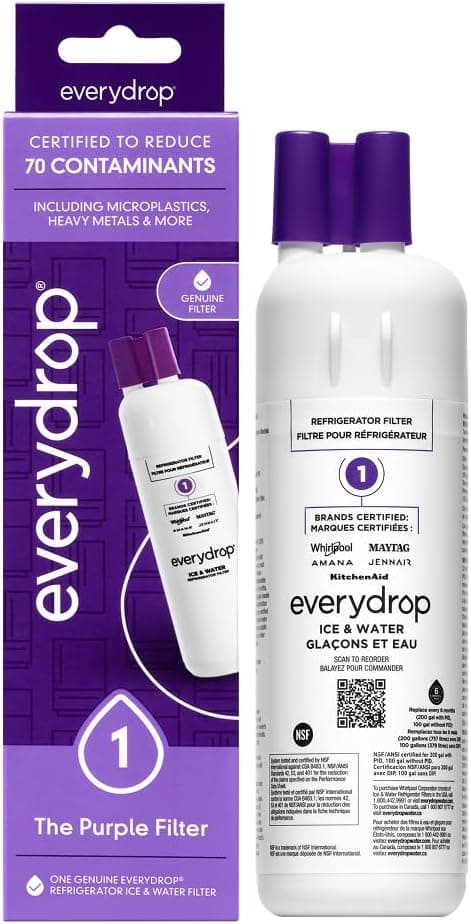 Only listing here naming coconut shell carbon
Coconut shell carbon appears on one filter listing in this category. The others name carbon block or name no medium at all.
everydrop Filter 1, EDR1RXD1
6 month life statedThe listing states NSF 42, 53 and 401 certification, reduction of 70 contaminants including 99% microplastics, coconut shell carbon, 6-month life.
Named on the listing: NSF/ANSI 42, 53, 401.The listing names all three standard numbers, which is why all three cells are filled.
View the listing on AmazonA genuine cartridge whose listing names all three standard numbers, which almost nothing else in this category does. The 70 contaminants and 99% microplastics figures are separate seller claims that sit beside the certification rather than inside it.
Suits A Whirlpool-family fridge that takes the EDR1RXD1 cartridge.
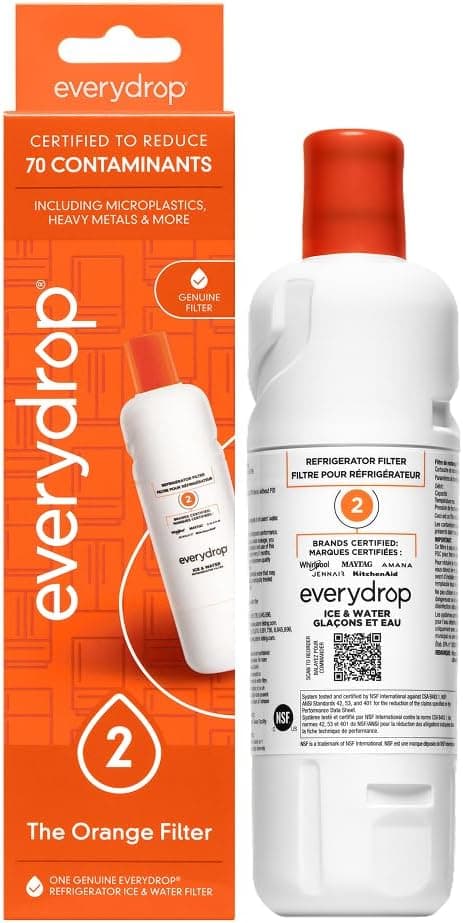
everydrop Filter 2, EDR2RXD1
6 month life statedThe listing states NSF 42, 53 and 401 certification, reduction of 70 contaminants including 99% microplastics, 6-month life.
Named on the listing: NSF/ANSI 42, 53, 401.The listing names all three standard numbers, which is why all three cells are filled.
View the listing on AmazonThe Filter 2 cartridge, with the same three standard numbers named and the same six month stated interval. The cartridge shape is the difference from Filter 1, not the certification.
Suits A Whirlpool-family fridge that takes the EDR2RXD1 cartridge.
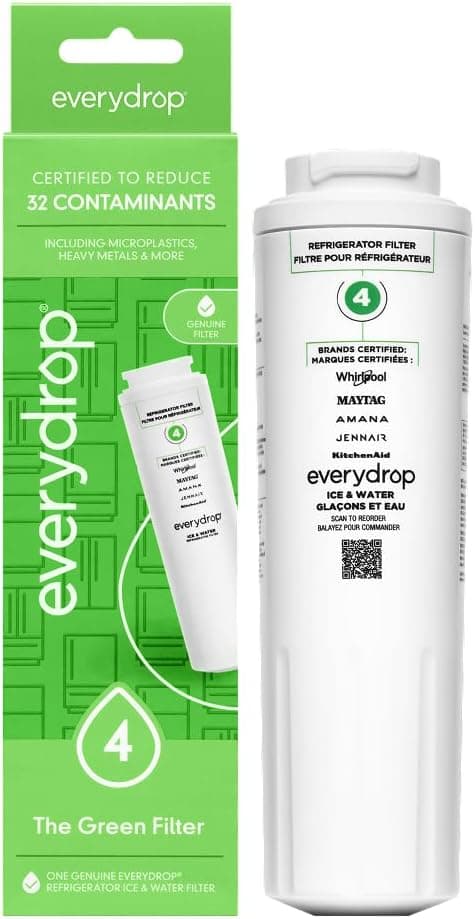
everydrop Filter 4, EDR4RXD1
The listing states NSF 42, 53 and 401 certification and reduction of 32 contaminants including 99% microplastics.
Named on the listing: NSF/ANSI 42, 53, 401.The listing names all three standard numbers, which is why all three cells are filled.
View the listing on AmazonThe Filter 4 cartridge names the same three standard numbers as Filters 1 and 2 but states 32 contaminants rather than 70. That is the clearest example on this site of two numbers moving independently: the certification is identical, the seller's contaminant count is not.
Suits A Whirlpool-family fridge that takes the EDR4RXD1 cartridge.
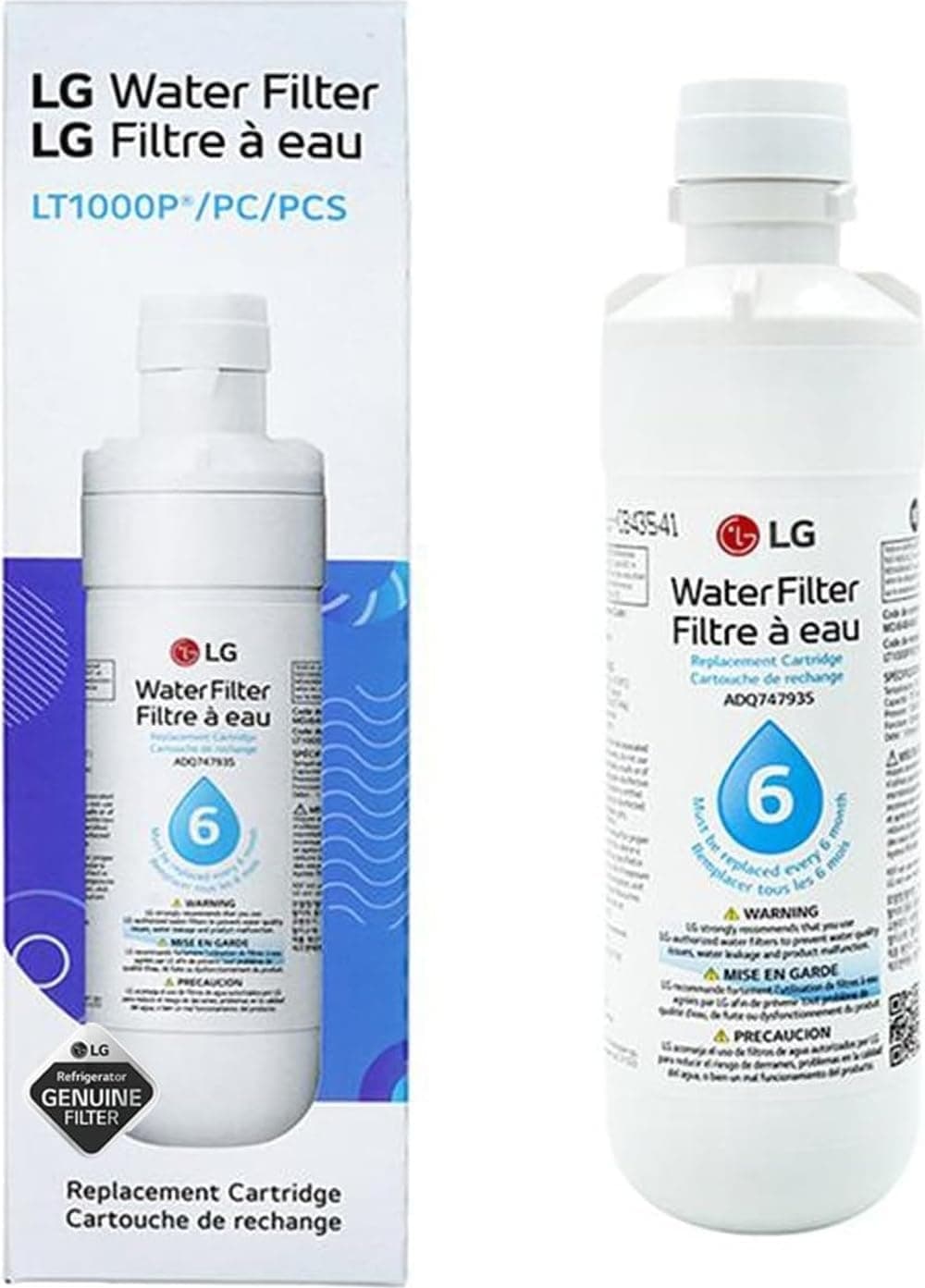 Only listing here stating a gallon figure
200 gallons, and it is the one fridge filter listing in this category that states gallons rather than months alone.
LG LT1000P Refrigerator Filter
200 gallon rating statedThe listing states NSF 42, 53 and 401 certification, a 6-month or 200-gallon capacity.
Named on the listing: NSF/ANSI 42, 53, 401.The listing names all three standard numbers, which is why all three cells are filled.
View the listing on AmazonA genuine LG cartridge that names all three standard numbers and states both a six month interval and a 200-gallon capacity. Stating both is the correct way to rate a filter, and it is why this listing is the one the filter life tool has the most to work with.
Suits An LG fridge that takes the LT1000P cartridge.